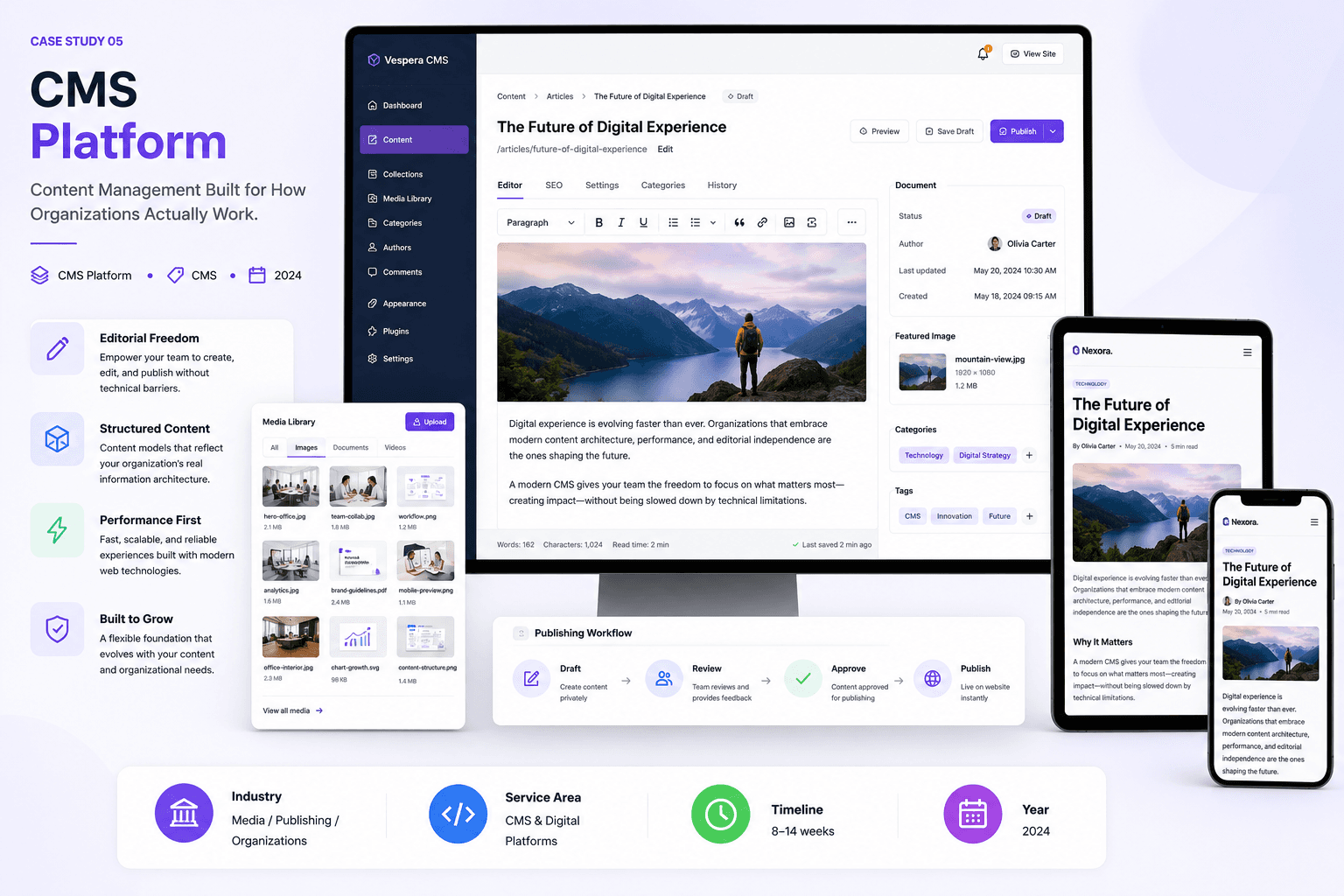
CMS Platform
Content Management Built for How Organizations Actually Work.
PROJECT OVERVIEW
This project demonstrates VT's capability in building content management platforms that go beyond basic CMS installations. The platform was architected to provide genuine editorial control, structured content modelling, and a clean separation between content and presentation.
Understanding the Problem Before Building.
Organizations often find themselves locked into CMS solutions that require developer involvement for basic content updates, or struggle with systems that do not reflect how their content is actually structured. This creates friction, slows down the team, and adds unnecessary cost to routine publishing work.
Clear Goals and Deliverables.
Build a content platform where the editorial team has genuine control over their content—publishing, updating, and managing without technical dependency—while maintaining the flexibility to grow the platform as requirements evolve.
Enable non-technical content editing across all key content types
Structure content models that accurately reflect organizational needs
Deliver fast, consistent page performance regardless of content volume
Create a platform foundation that can be extended without rework
Structured Execution from Discovery to Handover.
The project started with content modelling—understanding every type of content the organization needed to manage, how those types relate to each other, and how the editorial team preferred to work. The technical architecture followed the content model rather than the other way around.
Content Modelling
Mapped all content types, relationships, and editorial workflows before touching any technical setup.
CMS Configuration
Configured the headless CMS with structured content types, validation, and editorial permissions.
Frontend Development
Built the Next.js frontend with static generation pulling from the CMS content API.
Editorial Handover
Trained the content team and documented workflows before transferring editorial ownership.
A Platform Built for Editors, Not Engineers.
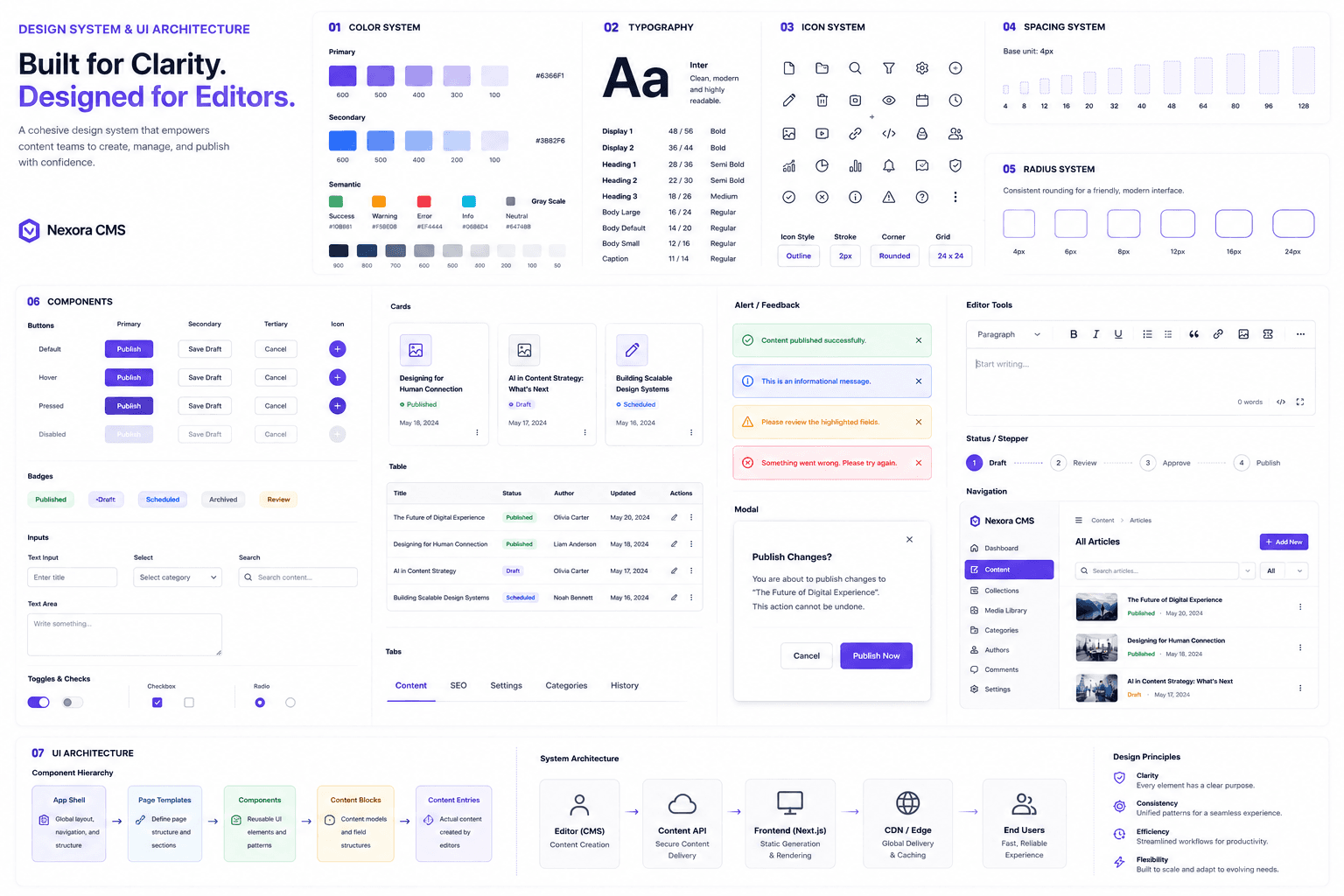
The editorial interface was configured to match how the team thinks about their content—not how a generic CMS organizes data. This means fewer workarounds, faster publishing, and a system the team actually wants to use.
Engineered with Purposeful Tools.
Every component in this project's stack was selected to balance developer productivity, end-user performance, and operational maintainability.
Features Designed for Impact.
A breakdown of the core features implemented and the tangible value they unlock.
Structured Content Modelling
Content types defined according to actual organizational structure rather than generic templates.
Non-Technical Publishing
All content areas editable through a clean CMS interface without code changes.
Static Generation
Pages built at compile time from CMS content, with on-demand revalidation on content changes.
Media Management
Integrated asset library for images, documents, and media with optimization.
Preview Environment
Editors can preview content changes before publishing to the live site.
Content Versioning
Previous versions of content preserved and restorable.
Operational Impact & Long-term Value.
The organization's editorial team gained full control over their content without requiring technical support for routine updates. The platform architecture provides a stable foundation that can accommodate new content types and features as the organization grows.
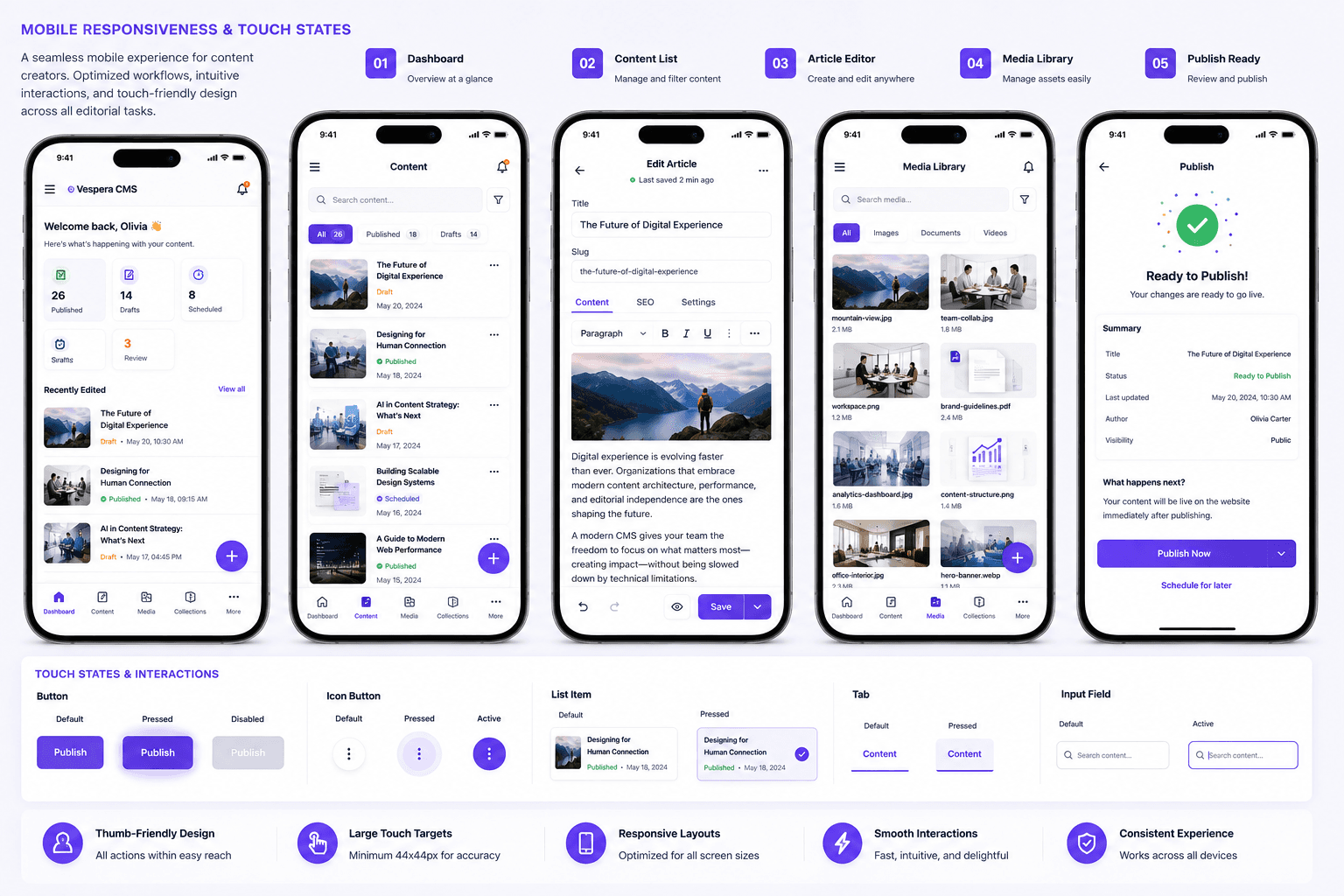
Interface Gallery
Snapshots of the responsive design, key screen flows, and component states.